Last week, we used Einstein Triangles to practice critical thinking skills and provide a means for students to use Mirror and Teach-ok with ideas generated by themselves and their peers. We incorporated the Common Core Reading Strategy for Science 6-8.9, and I provided the student's with a paragraph frame to organize their ideas into a written piece.
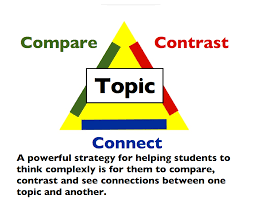
Our topic was photosynthesis and we used Einstein Triangles to compare, contrast and connect three articles about 1 topic. First, using a graphic organizer for RST 6-8.9, the students generated a list of similarities and differences among the three sources we used to collect information about photosynthesis. They used these ideas to help them compare, contrast and connect. We went through each step together looking first for the ideas that were similar in each source. We then identified differences in the sources and ended with connections. The students used gestures for similar, different, connect, also, but, in conclusion and we used the because clapper. The next time, when we compare, contrast, connect photosynthesis and respiration we will add for example. Below is student sample paragraph created using a provided frame. The parts of the frame are in bold.
These three sources are similar because all three discuss photosynthesis, raw materials and glucose. Also, all three include ideas about where certain materials enter, but they don't all use the term "inputs". These three sources are different because not all them include chlorophyll, the history of photosynthesis or the literal meaning of the word. Also, the video included reasons why the leaves change color but doesn't discuss pigments like the worksheet. These three sources are connected because they remind me that every living thing is organized. In conclusion, all three of these sources are organized differently but focus on the same topic of photosynthesis.
The whole lesson took two days. We used about 20 minutes to introduce and review the proper gestures. Next time, we won't have to do this. In my opinion, it was well worth the time. The conversations the kids were having were focused and meaningful. Watching them help each other decide on similarities and differences was very authentic and forced them to spend time with their resources looking for evidence. Even though I gave them the paragraph frame, they still needed to consider their word choice and be sure it read fluently. When we did Mirror and Teach-ok, the focus changed from always watching me for ideas but to being about using their own ideas. All I had to do this time was model how the Mirror would look using Einstein Triangles gestures. It was very student centered. Their ideas were relevant and thoughtful. Today, Monday, they showed they had much control over the topic as we worked to explain the chemical formula. In the end, we addressed important science and common core standards, and, with the help of our gestures, had a good time doing it! Success.
If you haven't checked Einstein Triangles, you can see more about them at WBT website. If you search for them in the forum, there is a free download to help you get started. For my 7th graders at this point in the year, I felt like I needed to make some modifications to the pacing. Regardless, the approach provides a great structure for supporting critical thinking among all students. Not only do they help to keep everyone involved but the structure keeps each learner challenged as well. This was evident in their writing. This student evidence provided me a means of offering feedback and support as we moved forward.
